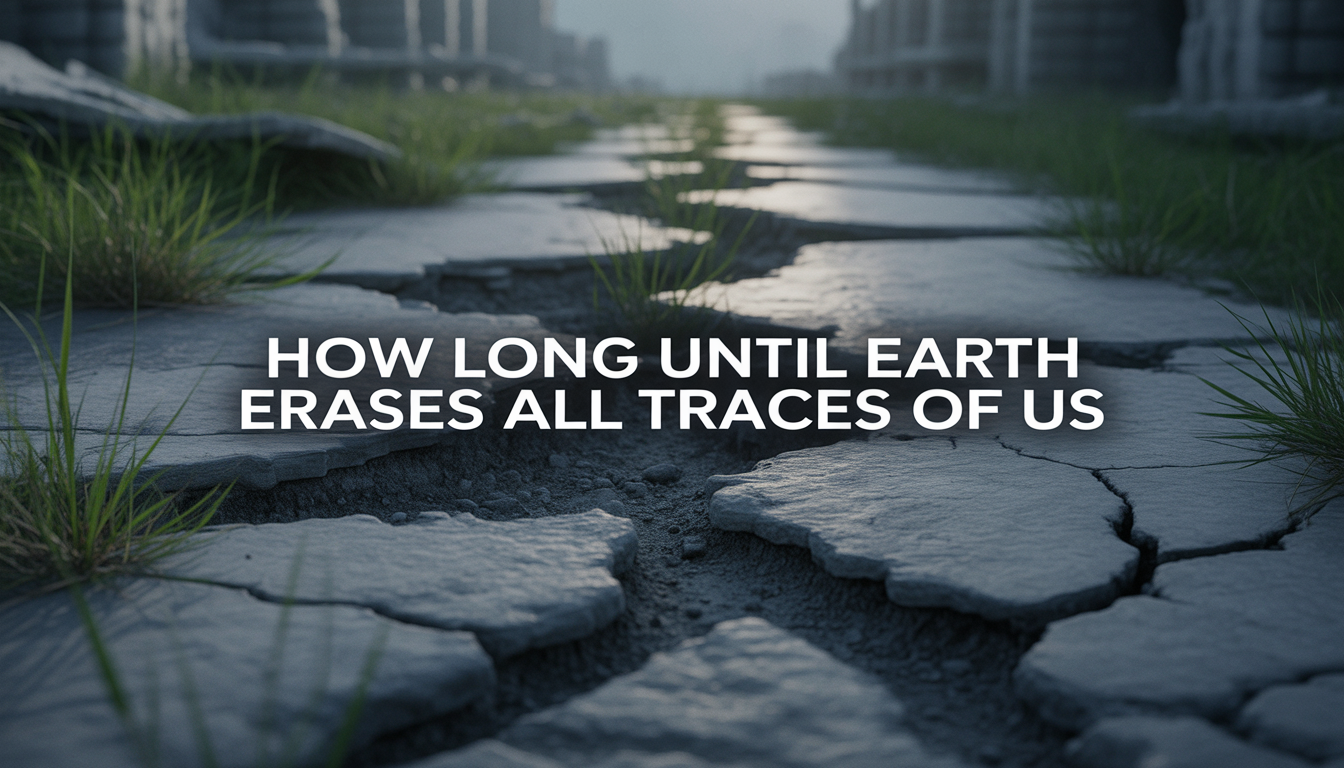
If all the humans on Earth died, how long until the Earth erased every trace of us? To keep things grounded, we’ll keep checking on a few things in my room to see when they stop being identifiable. At first, the world would be loud. Engines humming, factory machines cycling, cars crashing, planes falling, fires would start here and there. For a brief moment, the planet would look alive. But that illusion wouldn’t last. Within hours, the sounds of Earth would start to change. Not all at once and not into silence. Things would slowly fall out of sync. Systems that needed constant fixing would begin to slip. Some machines would just shut off on their own. What would disappear first wouldn’t be humanity’s buildings, but humanity’s control.
24 Hours: When the Lights Go Out:
In the first 24 hours, the lights go out. Modern power grids survive only through constant human correction. Supply and demand are balanced minute by minute, not automatically, but through thousands of small adjustments made by engineers responding to weather, usage spikes, and equipment strain. Without those hands, the system would begin drifting almost immediately.
At first, the failures would be subtle, but one failure would trigger another, like the world is playing one giant game of dominoes. Fossil fuel plants would shut down within hours or days as fuel delivery systems stalled and monitoring ceased. Nuclear power plants would enter automatic shutdown, relying on emergency generators to circulate cooling water through their cores. Those generators would work as designed, designed for short-term emergencies, not permanent absence. They would fail as fuel ran out.
As cooling systems stopped, water would begin to boil away. Reactors wouldn’t explode, but containment zones would slowly become irreversibly contaminated. Within roughly 48 hours, artificial light would vanish from the night side of the Earth. Not everywhere at once, though.
A few places would stay lit a little longer. Hospitals, data centers, and military bases. But these machines are just doing their last job before clocking off forever. At the end of the first day, Earth would still look familiar from space. Cities still stand, but functionally, the human world is already gone.
Weeks to Months: The Green Invasion Begins:
In weeks to months, the green invasion would begin. Beneath cities, tunnels, basements, and subways fill with water. Within weeks, underground cities would be submerged underwater. Above ground, change is slower but relentless. Without cars, factories, and air conditioners running all the time, cities would start to cool down.
Right now, cities stay warmer than the areas around them because engines, buildings, and machines constantly release heat. Once all of that stopped, that extra warmth would fade away.
Temperatures would start changing more with the seasons again. Summers would feel hotter. Winters would feel colder. Buildings aren’t made for that much change without maintenance. Materials would expand when it’s hot and shrink when it’s cold. Cracks would open. Seals would fail. Water would start getting into places it never could before.
Plants take over quickly. Grass through roads, vines up walls. Without humans, nothing stops them. Cities blur, losing their straight lines and sharp edges. After a few months, they feel unfinished. Human spaces remain, but nature is already taking control.
1 to 50 Years: Concrete Crumbles and Steel Rusts
In 1 to 50 years, concrete would start to crumble. We think of concrete as rock, but it’s more like a sponge. Modern concrete is reinforced with steel rebar, and that steel is its weakness. As rainwater seeps through the hairline cracks in the surface, oxygen reaches the metal inside. Rust begins forming slowly at first, then faster as the process feeds itself. Rust occupies far more space than the steel it replaces.
As it expands, it pushes outward, cracking the concrete from within. Bridges would be among the first major structures to collapse. Designed to carry constant loads and maintained continuously, they would weaken as corrosion spread through their cores.
Skyscrapers would remain standing longer, but they would not go unscathed. Window seals would fail. Water would enter the upper floors. In colder climates, freeze and thaw cycles would widen cracks. Interior floors would collapse. Entire towers would hollow out from the inside before finally giving way. This is also where the glass cup stops winning arguments about being a cup.
100 to 500 Years: Cities Become Terrain:
In 100 to 500 years, almost everything humans built would already be falling apart. Anything that relied on regular use, repair, or alignment would already be gone. Most buildings are gone. Wooden structures rot. Roofs collapse. Floors wash away. Walls fall outward. After centuries, homes are just low stacks of material slowly swallowed by plants and soil. What remained would no longer resemble cities. It would resemble terrain.
- In dry regions, wind would take over. Cities built in deserts would slowly disappear beneath the dunes. Their outlines softened until they blended into the surrounding geology.
- In coastal areas, rising seas and storm surges would erase low-lying developments entirely, pulling concrete and debris into shallow marine environments.
- In temperate regions, forests would remain. Trees would grow where roads once ran, their roots following the fractured paths of old infrastructure.
- Animals that once depended on human environments would either adapt or vanish.
At this point, the only structures left standing would be those made of massive, heavy stone or in extremely dry environments like the pyramids of Giza or Mount Rushmore. And this is as far as the PS5 makes it. My console is now just a pile of materials.
10,000 to 1 Million Years: The Technofossil Layer:
In 10,000 to 100,000 years, almost every human-built objects are gone. But erasing every trace of humans isn’t that easy. Even tens of thousands of years later, long after buildings, cars, and tools had been erased, Earth still carries signs of humans. Refined metals, plastics, and industrial leftovers linger in rock, ice, and ocean mud.
Plastics break into microlastics, traveling through soil, water, and even plants and animals. Shapes vanish, but material remains. And this is how far our Lego brick lasts. Some gases fade slowly. Others linger in tiny quantities for hundreds of years. By this time, nothing we built would still be around. No cars, no houses, no roads. But the Earth would still carry tiny signs that humans were once here, hidden in the dirt, the water, and the rocks.
In 1 million years, if an alien geologist visited Earth, they wouldn’t find skyscrapers or satellites. From the surface, it would look like humans were never here at all. But if they dug into the ground, they would notice something odd. There would be a thin, strange layer buried in the earth, a line that doesn’t belong with the rest.
The technofossil layer, a layer of rock containing high concentrations of heavy metals, carbon isotopes from fossil fuel burning, and the compressed remains of lasting glass. The chicken bone layer. Because humans farm billions of chickens, the sudden appearance of billions of identical bird skeletons in the fossil record would be the most obvious sign that a dominant species once ruled.
Bottom Line:
Earth is about 4.5 billion years old. Humans have existed for only a tiny fraction of that. To the planet, we’re a fever that lasted a single afternoon. So, if all humans died, how long would it take for the Earth to erase every trace of us? It wouldn’t completely. We wouldn’t vanish entirely. Instead, we’d become a very, very interesting layer of dust. Yeah.
FAQs:
1. How long does it take for the lights to go out after humans disappear?
Within roughly 48 hours, artificial light vanishes from the night side of Earth.
2. What happens to nuclear power plants without humans?
Reactors don’t explode, but cooling fails, and containment zones become irreversibly contaminated.
3. When does nature start visibly reclaiming cities?
Within weeks to months, plants like grass and vines begin taking over roads and walls.
4. Why does reinforced concrete eventually crumble?
Rainwater seeps in, rusts the steel rebar inside, and the expanding rust cracks the concrete.
5. How long do massive stone structures like Mount Rushmore last?
They can remain standing for 100 to 500 years or more in dry environments.
6. What is the most obvious sign of humans left after 1 million years?
A thin “technofossil” layer of rock containing plastics, metals, and billions of chicken bones.